


ISSUES OF THE HEART
We are living in unprecedented times. The COVID-19 pandemic has shone a spotlight on the need for us all to take responsibility for our own health and for the vulnerable in society.
We don’t know what course the pandemic will take in the future but we do know that taking care of our hearts right now is more important than ever.
Cardiovascular disease (CVD) is the number one cause of death on the planet. It has many causes: from smoking, diabetes, high blood pressure and obesity, to air pollution, and rare and neglected conditions such as Chagas Disease and cardiac amyloidosis.
In the time of COVID-19, CVD patients are faced with a double-edged threat of a heart attack or a stroke. Not only are they more at risk of developing severe forms of the virus, but they may also be afraid to seek ongoing care for their hearts.
HERE ARE SYMPTOMS TO SUGGEST THE POSSIBLE ONSET OF A STROKE
The warning signs of heart attack are:
- Chest discomfort. Most heart attacks involve discomfort in the center of the chest that lasts more than a few minutes, or that goes away and comes back. It can feel like uncomfortable pressure, squeezing, fullness or pain.
- Discomfort in other areas of the upper body. Symptoms can include pain or discomfort in one or both arms, the back, neck, jaw or stomach.
- Shortness of breath with or without chest discomfort.
- Other signs may include breaking out in a cold sweat, nausea or lightheadedness.
The warning signs of stroke are:
- Sudden numbness or weakness of the face, arm or leg, especially on one side of the body
- Sudden confusion, trouble speaking or understanding
- Sudden trouble seeing in one or both eyes
- Sudden trouble walking, dizziness, loss of balance or coordination
- Sudden, severe headache with no known cause
F.A.S.T. is an easy way to remember how to recognize a stroke and what to do when you spot a stroke
F: Face drooping
A: Arm weakness
S Speech Difficulty:
T: Time to call for immediate Help
Not all these signs occur in every heart attack or stroke. Sometimes they go away and return. If some occur, get help right away. Every minute counts if you’re having a heart attack or stroke. The sooner you get medical help, the more likely you are to recover. You could save your heart or brain from severe damage once you act quickly.
Learn these symptoms and share them with your family, friends and caregivers.
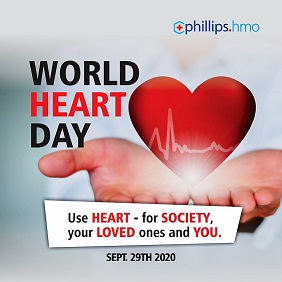
World Hear Day 2020
Use Heart to beat CVD … for your loved ones, society, and you
Culled; American Heart association and World Heart Federation


